
Control Systems
Before Replacing a Failed Pressure Switch in Chemical Service… Consider this!
Sep
A common reaction to a failed pressure switch is often finding the part number or pressure range and order the closest replacement. You’ve heard it… “That’s the way we’ve always done it.” But is it really the best approach? Probably not, because this approach can cause repeat failures, unreliable operation, process interruptions, or safety concerns.
It begs the question, “Why did the switch fail?” Maybe spending a little time to review the application before selecting the replacement is a good idea. Especially, if the last person who replaced it retired two years ago.
So here are some practical tips to help get the system back up and running.
1. Understanding “Why” the Switch Failed is the First Step!
Just doing a like-for-like replacement may simply repeat the original failure. So why not reflect on and look for the root cause of what might have caused the switch to fail. Here are some factors to consider to get started:
- Chemical incompatibility or corrosion
- Pressure spikes or excessive proof pressure
- Process temperature
- Vibration or pulsation
- Moisture or Environmental exposure
- Electrical overload
- Excessive cycling
- Improper setpoint or deadband
- Normal age and wear
2. Let’s get you started by collecting the right information.
Existing switch information
- Manufacturer
- Complete part number
- Model and pressure range
- Setpoint and reset point, if known
- Electrical rating
- Connection size and type
- Enclosure rating
- Photos of the nameplate, switch, wiring, and installation
Application conditions
- Process chemical or media
- Normal operating pressure
- Maximum operating pressure
- Possible pressure spikes
- Process and ambient temperatures
- Required setpoint
- Desired deadband
- Hazardous-area classification
- Vibration or pulsation conditions
- Indoor, outdoor, washdown, or corrosive environment
- Voltage and electrical load being switched
3. Consider Critical Selection Factors before you select your pressure switch.
Pressure range and setpoint
- The setpoint should fall within an appropriate portion of the switch’s adjustable range.
- Avoid selecting a switch solely because its range includes the desired setpoint.
Wetted materials and chemical compatibility
- Identify every switch component that contacts the process.
- Review diaphragm, piston, seals, process connection, and housing materials.
- Confirm compatibility with the specific chemical, concentration, and temperature.
Proof and burst pressure
- Define the difference between normal operating pressure, proof pressure, and burst pressure.
- Account for startup conditions, pump discharge pressure, blocked lines, and pressure surges.
Deadband and repeatability
- Explain that deadband is the difference between switch actuation and reset.
- Show how excessive or insufficient deadband can affect alarms, pumps, compressors, and shutdown functions.
Electrical rating
- Confirm voltage, current, AC or DC service, and the type of electrical load.
- Consider whether the switch operates a relay, contactor, PLC input, alarm, or equipment directly.
Enclosure and area classification
- Evaluate dust, moisture, washdown, outdoor exposure, and corrosive atmospheres.
- Confirm hazardous-location requirements before selecting the enclosure and approvals.
Vibration, pulsation, and cycling
- Mechanical switches can be affected by equipment vibration and rapid pressure changes.
- Consider pulsation dampeners, remote mounting, or an electronic pressure switch when appropriate.
4. Mechanical vs. Electronic Pressure Switches Considerations and Options
| Consideration | Mechanical switch | Electronic switch |
|---|---|---|
| Basic switching | Simple and proven | Programmable |
| Local indication | Usually limited | Often includes a display |
| Setpoint adjustment | Mechanical | Digital |
| Deadband flexibility | Model-dependent | Often adjustable |
| Diagnostics | Limited | May provide status and fault information |
| Power requirement | May not require separate power | Typically requires power |
The best option depends on the application—not simply which technology is newer.
5. When Like-for-Like Replacement Makes Sense
A direct replacement may be appropriate when:
- The existing switch provided acceptable service life.
- The failure resulted from normal wear.
- Application conditions have not changed.
- Wetted materials and ratings remain suitable.
- The replacement retains required certifications and approvals.
6. When to Consider a Different Switch
Review alternatives when:
- The switch failed earlier than expected.
- Corrosion or chemical attack is visible.
- The process has pressure spikes or pulsation.
- Operators need a visible pressure reading.
- Setpoints are difficult to verify.
- The application requires better repeatability or adjustable deadband.
- The original switch is obsolete or difficult to obtain.
- Process conditions have changed since the original installation.
How WilsherCo Can Help:
- Cross-reference an obsolete or failed pressure switch.
- Review the part number and application conditions.
- Identify potential causes of premature failure.
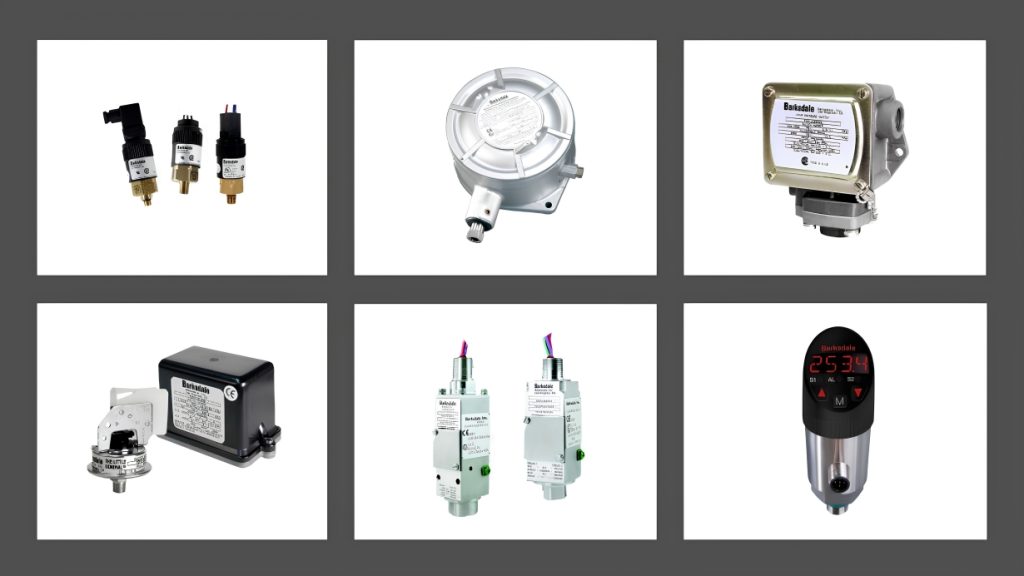
- Compare Barksdale mechanical and electronic pressure switch options.
- Provide a replacement quote based on the complete application.
Before ordering a replacement, send Wilsherco the failed switch part number, nameplate photos, and application details. We can help determine whether a direct replacement or a better-suited Barksdale option is appropriate.