
-
×
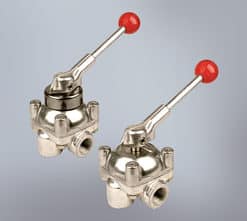 Barksdale Valve 9021-MC-A
1 × $300.00
Barksdale Valve 9021-MC-A
1 × $300.00 -
×
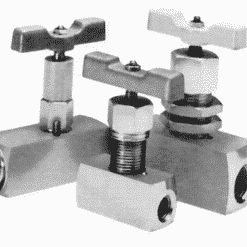 Kerotest Needle Valve N5312
1 × $234.00
Kerotest Needle Valve N5312
1 × $234.00
Control Systems
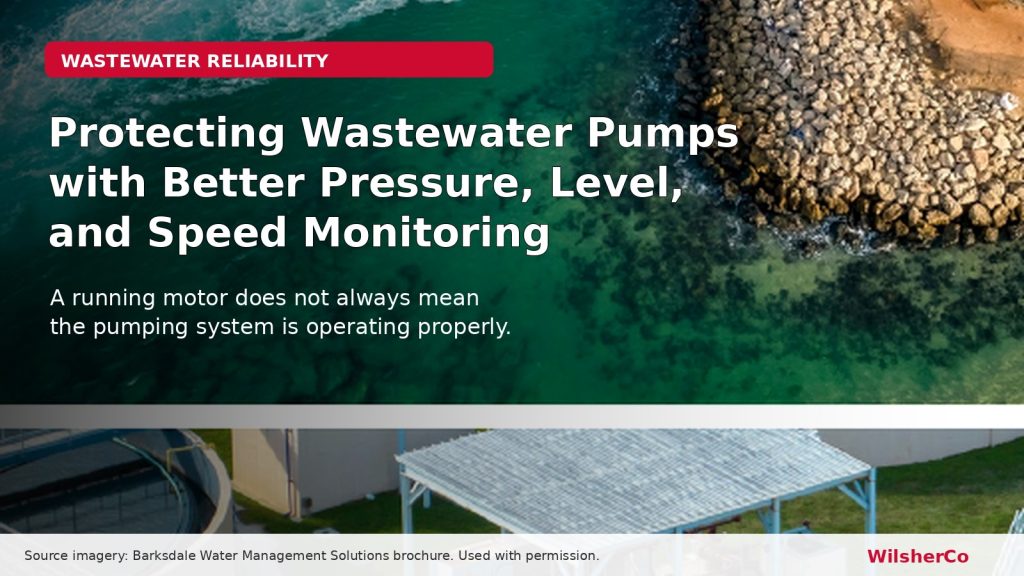
Protecting Wastewater Pumps with BetterPressure, Level, and Speed Monitoring
22
Jul
Jul
A practical guide for wastewater maintenance managers, reliability teams, E/I technicians, engineers, and contractors
Wastewater pump protection requires more than confirming that a motor has received a run command.
A pump can be running, but that does not always mean the wastewater system is operating properly.
A pump may lose prime, run dry, operate against a blocked discharge, cycle more frequently than intended, or continue operating while flow is restricted. In other cases, the motor may be energized while the pump shaft is turning too slowly—or not turning at all.
By the time maintenance personnel recognize the problem, seals, bearings, motors, impellers, or other equipment may already have experienced unnecessary wear.
Better pressure, level, and speed monitoring can give maintenance managers, reliability teams, and E/I technicians greater visibility into actual operating conditions and help identify developing problems before they become emergency repairs.
A Running Motor Does Not Tell the Whole Story
Wastewater pumping systems depend on multiple devices and process conditions working together, including:
- Pumps and motors
- Wet wells, tanks, and basins
- Valves and piping
- Level switches and transmitters
- Pressure switches and transmitters
- Pump-shaft speed sensors
- Control panels, alarms, and plant monitoring systems
A control panel may confirm that a motor has been commanded to run. However, that signal alone does not prove that the pump is producing the expected result.
Pressure feedback can provide useful information, but pressure alone may not always confirm that fluid is moving normally. A more complete pump-protection strategy may also consider level conditions and the actual rotational speed of the pumping equipment.
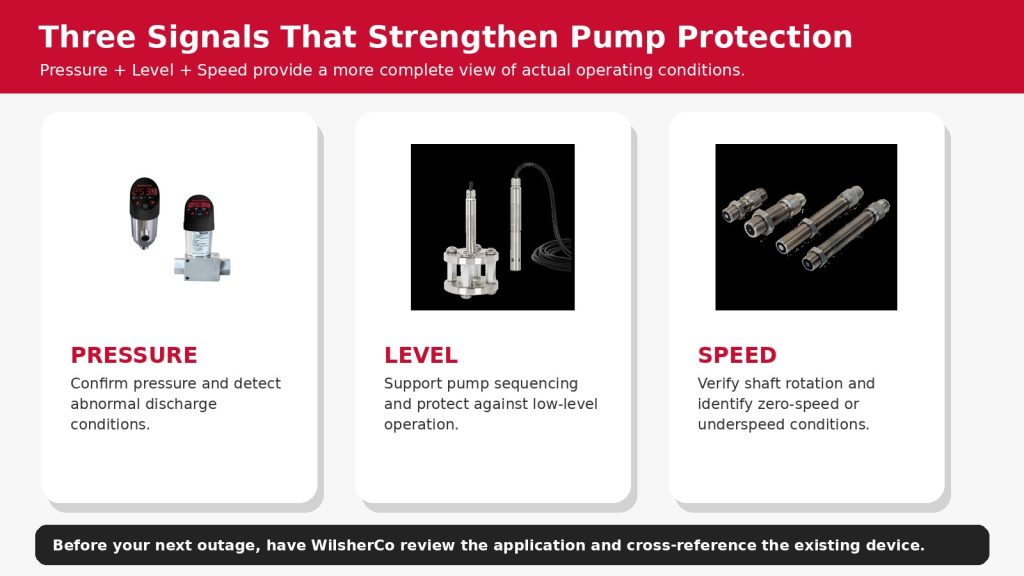
Pressure, level, and speed instrumentation can work together to provide earlier warning of abnormal pump conditions.
Common Causes of Pump-Protection Problems
- Failed or worn pressure switches
- Plugged or restricted sensing lines
- Fouled or damaged level devices
- Incorrect level-switch locations
- Aging instrumentation
- Incorrect pressure ranges or setpoints
- Improperly selected replacement devices
- Loss of pump-shaft speed feedback
- Moisture, corrosion, vibration, or chemical exposure
- Relying only on motor-command status
- Replacement parts that are unavailable during an outage
In some cases, a failed device is replaced with something that appears physically similar but does not match the original application. The replacement may have the wrong range, setpoint, output signal, electrical rating, process connection, enclosure, wetted materials, or environmental approval. A device can fit mechanically and still be the wrong solution.
Questions to Ask When Reviewing Pump Protection
Is the pump protected from dry-run conditions?
A pump operating without sufficient liquid can experience overheating, cavitation, seal damage, and premature failure. Reliable level and pressure feedback may help identify conditions that indicate insufficient liquid or abnormal pump operation.
Is the wet-well or basin level being measured reliably?
Inaccurate level information can cause pumps to start or stop at the wrong time, cycle too frequently, or continue operating when the available liquid level is too low.
- Single-point float switches
- Multi-point float switches
- Electronic level switches
- Submersible level transmitters
- Hydrostatic level transmitters
- Continuous float transmitters
Is the pump developing the expected pressure?
A pressure switch can provide a simple alarm or control point. A pressure transmitter can provide continuous feedback that allows operators to see changing system conditions, including low discharge pressure, increasing restrictions, unexpected pressure changes, and pump-performance deterioration.
Is the pump shaft actually rotating at the intended speed?
Motor status does not always confirm actual mechanical rotation. Speed monitoring can help detect zero-speed, underspeed, overspeed, coupling problems, and unexpected changes in pump performance.
Are the devices suitable for the environment?
Wastewater facilities can expose instrumentation to moisture, washdown, submersion, corrosive conditions, vibration, outdoor temperatures, aggressive media, and hazardous areas. Device selection should account for the actual installation environment, including enclosure ratings, wetted materials, approvals, cable construction, and media compatibility.
Are suitable replacements available before the next outage?
Waiting until a device fails can create unnecessary urgency. Identifying critical pressure, level, and speed devices before a planned outage can reduce downtime, improve purchasing decisions, and prevent an incorrect substitute from being installed simply because it is immediately available.
Choosing the Right Type of Monitoring
Mechanical Pressure Switches
A mechanical pressure switch provides a discrete signal when pressure reaches a defined setpoint. It may be used to activate an alarm, start or stop equipment, confirm minimum pressure, or identify high- or low-pressure conditions.
Pressure Transmitters
A pressure transmitter provides a continuous signal that corresponds to actual system pressure. This can provide greater visibility into pump performance, pressure trends, increasing restrictions, pressure instability, and developing system problems.
Electronic Pressure Switches
Electronic switches can combine switching, indication, and transmitter functions in one device. Depending on the model, they may provide one or two switching points, local digital indication, continuous output, field programming, analog output, or IO-Link communication.
Level Switches and Transmitters
Level switches can provide discrete high- or low-level signals, while level transmitters provide continuous measurement. These devices may support pump start and stop control, dry-run protection, high- and low-level alarms, wet-well monitoring, and tank or basin indication.
Speed Sensors and Switches
Speed sensors can monitor the actual rotation of a pump shaft or other rotating equipment. They may be used with switches, transmitters, displays, and alarm functions to identify underspeed, overspeed, or zero-speed conditions.
Where Barksdale Fits
Barksdale provides pressure, level, temperature, and speed instrumentation for water and wastewater applications. Its portfolio can support applications such as:
- Stormwater and sewer lift stations
- Equalization tanks
- Sedimentation and aeration basins
- Clarifiers
- Anaerobic and aerobic digesters
- Blower and compressor systems
- Mobile and containerized treatment systems
- Pump-shaft and rotating-equipment monitoring
- Local and remote plant indication
Depending on the application, Barksdale products may be used to establish pressure alarm or control points, provide continuous pressure feedback, monitor wet-well or basin level, provide high- and low-level switching, monitor pump-shaft speed, display measurements locally, or send signals to a plant monitoring system.
The key is selecting the correct device for the actual service—not simply choosing a product that appears similar to the one being replaced.
Device Selection Requires More Than a Part Number
When reviewing a pressure, level, or speed device, consider:
- Process media
- Measurement range
- Required setpoints
- Accuracy
- Electrical ratings
- Output signal
- Communication protocol
- Process connection
- Mounting arrangement
- Wetted materials
- Seal materials
- Enclosure rating
- Hazardous-area requirements
- Cable type and length
- Local-display requirements
- Replacement availability
Barksdale also offers configurable and customized options, including special outputs, electrical connections, process connections, wetted materials, media compatibility, factory-set switch points, and custom probe lengths.
How WilsherCo Can Help
WilsherCo is a Barksdale Channel Partner with experience helping wastewater facilities, contractors, engineers, maintenance teams, reliability professionals, and E/I technicians select and replace instrumentation.
We can assist with:
- Barksdale product selection
- Replacement-part identification
- Cross-referencing existing devices
- Pressure-range and setpoint review
- Level-measurement review
- Pump-speed monitoring options
- Output-signal and electrical review
- Process-connection review
- Wetted-material and media-compatibility considerations
- Environmental and enclosure requirements
- Specification review
- Quote support
- Product availability
We also keep many Barksdale products in stock, helping customers reduce the time required to replace critical instrumentation. Whether you are responding to a failed device, preparing for an outage, reviewing pump protection, or specifying instrumentation for a new project, involving WilsherCo early can help reduce selection errors and last-minute urgency.
Review the Monitoring System Before the Pump Fails
Pressure, level, and speed devices may be relatively small components within a wastewater system, but they can provide critical information about actual operating conditions.
Better monitoring can help your team:
- Recognize abnormal conditions earlier
- Protect pumps and motors
- Reduce unnecessary cycling
- Detect dry-run or low-level conditions
- Identify mechanical speed problems
- Improve plant visibility
- Reduce unexpected downtime
- Plan repairs before a problem becomes an emergency
Before your next outage or pump-protection project, contact WilsherCo to review your pressure, level, and speed-monitoring requirements. Send us the information from your existing device, request a quote, or involve us during the specification process so we can help match the right Barksdale solution to the application.